LCA 3: FROM CONSTRUCTION TO DEMOLITION
THE IMPORTANCE OF A LIFE CYCLE APPROACH
Published on Építészfórum on 17 June 2025 (in Hungarian)
When analysing the life cycle of a building, it becomes clear that the highest CO2 emissions occur during its operational phase. Nevertheless, it is important to also consider the construction, demolition and waste management phases, and to reduce carbon emissions through conscious design, as these phases also have a significant environmental impact. In addition, the recycling of dismantled building elements into the material stream contributes to a circular economy.
Introduction
The third article in our series on Life Cycle Assessment (LCA) explores the role of LCA across the entire building lifecycle, from construction to demolition. As highlighted in the first article, the operational phase (B6) typically generates the highest CO₂-equivalent emissions, primarily due to the building’s energy consumption. This is followed by emissions associated with the production of building materials, defined during the design stage (A1–A3).
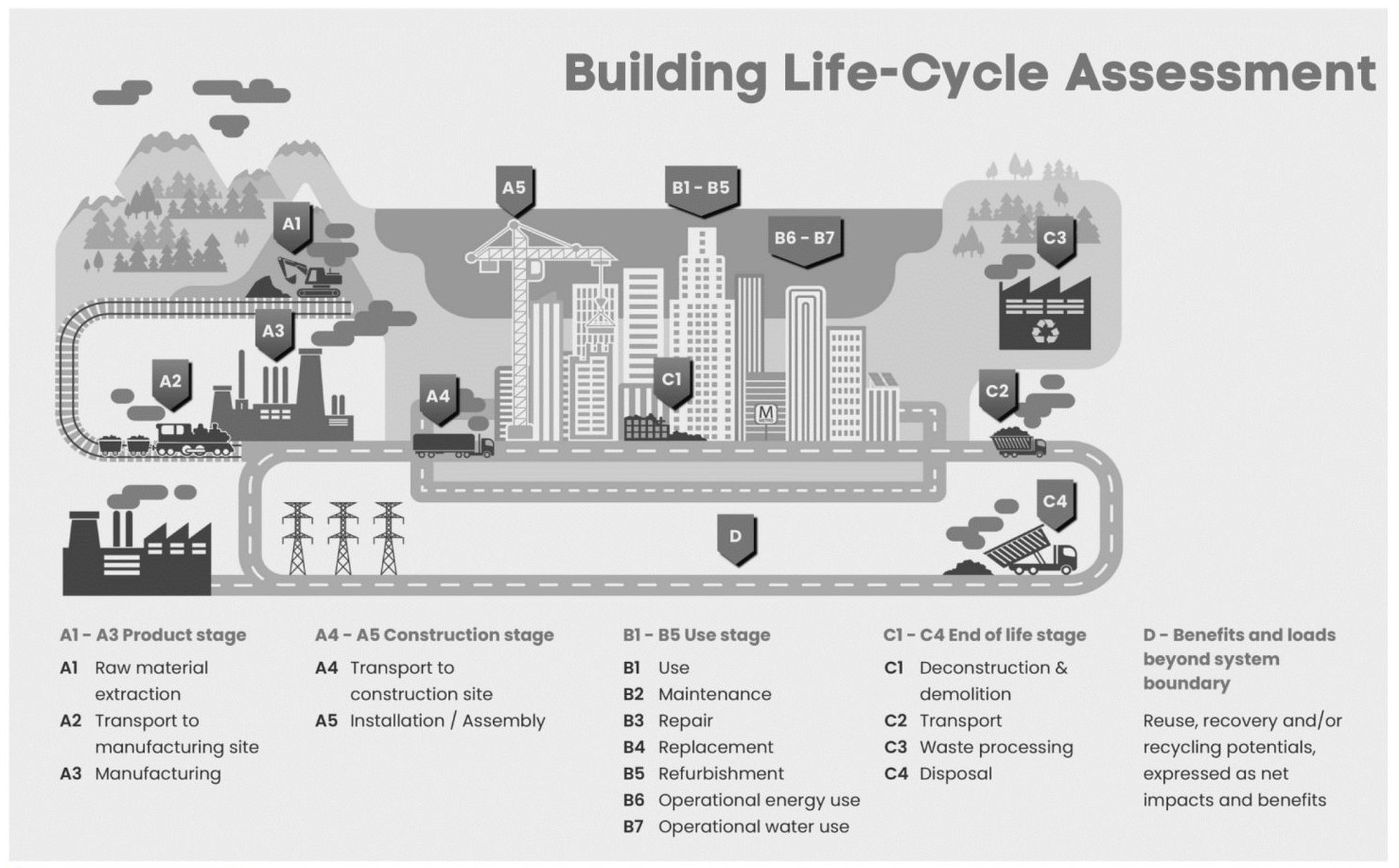
Stages in the life cycle of a building according to EN 15978 and EN 15804. Source © OneClick
Due to their lower pollutant emissions, the phases realted to construction, demolition, disposal and the reamining operational stages are often overlooked when assessing environmental impacts. However, data and experience show that these phases also contribute significantly to the overall environmental footprint. With conscious planning, sustainable construction strategies, and efficient operation, the emissions associated with most life cycle stages be substantially reduced.
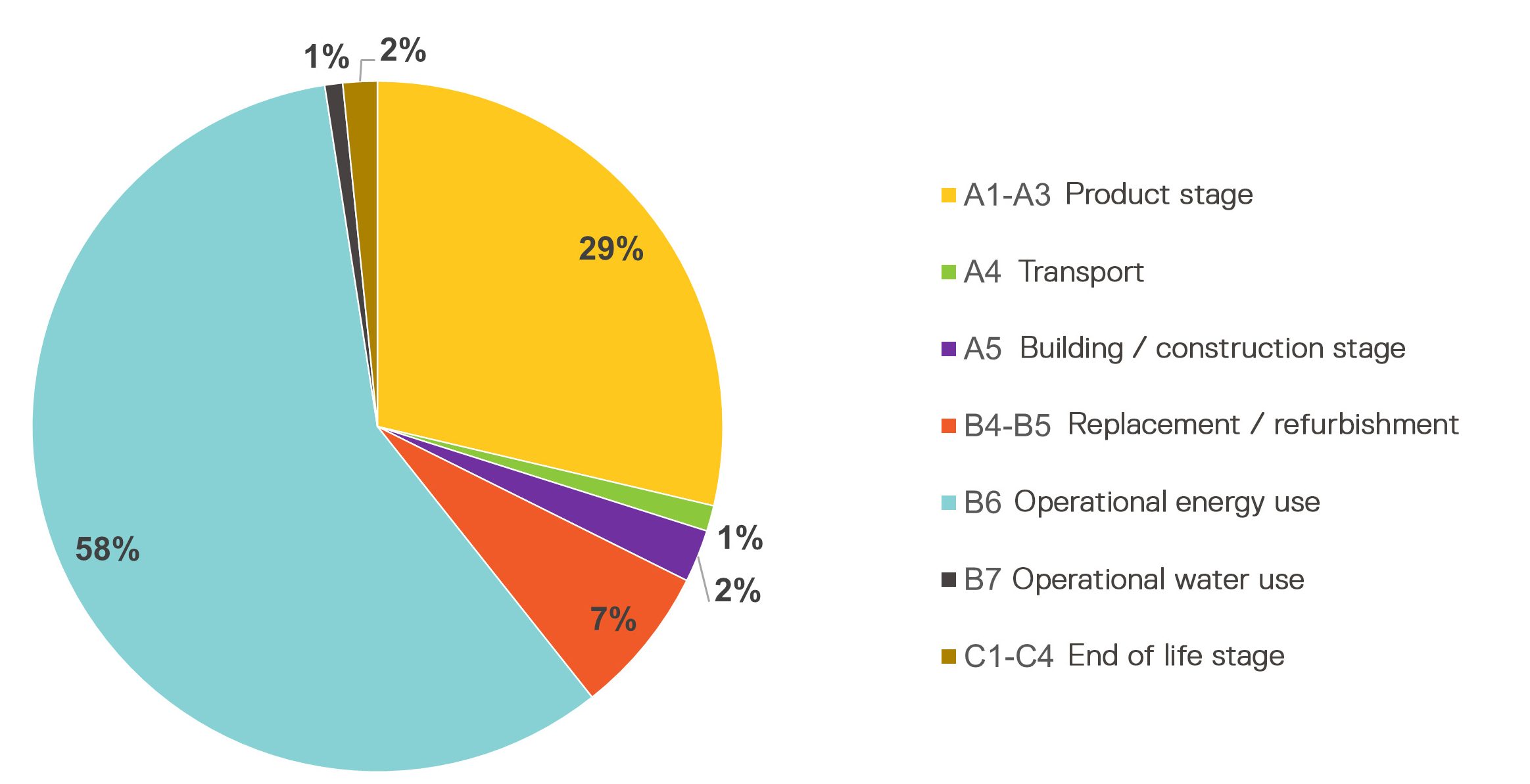
Average global warming potential (GWP) of LCA phases. Source © ABUD
Reducing carbon emissions during construction
With the completion of the consious planning stage discussed in the second article, the construction phase follows, which can be grouped into two categories: emissions related to thetransportation of materials to the construction site (A4), and those associated with the construction activities themselves (A5).
Transport
Emissions in stage A4 primarily result from the fuel consumption of transport vehicles. Therefore, minimizing transport distances—by prioritizing local or nearby materials—is key. Further reductions can be achieved through optimized material logistics, such as scheduled deliveries and avoiding unnecessary loading. Additionally, using low-emission vehicle fleets and carefully planning transport routes can also significantly lower emissions.
Construction-related emissions encompass all emissions, along with energy, water, and fuel consumption, as well as waste management during the building process. Significant reductions can be achieved by adopting best practices and sustainable construction solutions, such as the use ofprefabricated building elements, which greatly reduce installation time, resource demand, and the anount of on-site waste. Moreover, a well-maintained, low-emission, and energy-efficient fleet of construction machinery can further minimize local pollution and emissions on- site.
To minimize waste generation, a detailed waste management strategy should be established before construction begins. This strategy should outline the on-site sorting, reuse, and recycling of packaging, cutt-offs, and leftover materials, and promote the on-site recovery of construction and demolition waste. Additionally, returning unused materials to the manufacturer further reduces waste and supports the adoption of closed-loop manufacturing models There is also significant potential for emission reduction through the conscious selection of buildig materials for exymple, by prioritizing products with recycled content—particularly in the case of concrete and steel.
The sustainability and life-cycle impacts of construction are also assessed by green building certification schemes such as LEED and BREEAM. Their requirements include developing a comprehensive Waste Strategy, prioritizing materials with Environmental Product Declarations (EPDs) or recycled content, and monitoring and documenting construction-related emissions.
Operational Carbon Emissions: Reducing Impact Through Renovation, Retrofitting, and Efficient Resource Use
The operational phase is often the most emission-intensive stage of a building’s life cycle. While emissions from construction materials appear as one-time, upfront impacts in the LCA calculations, operational emissions accumulate continuously over the building’s lifetime—typically 50–60 years, and in some cases up to 100 years.
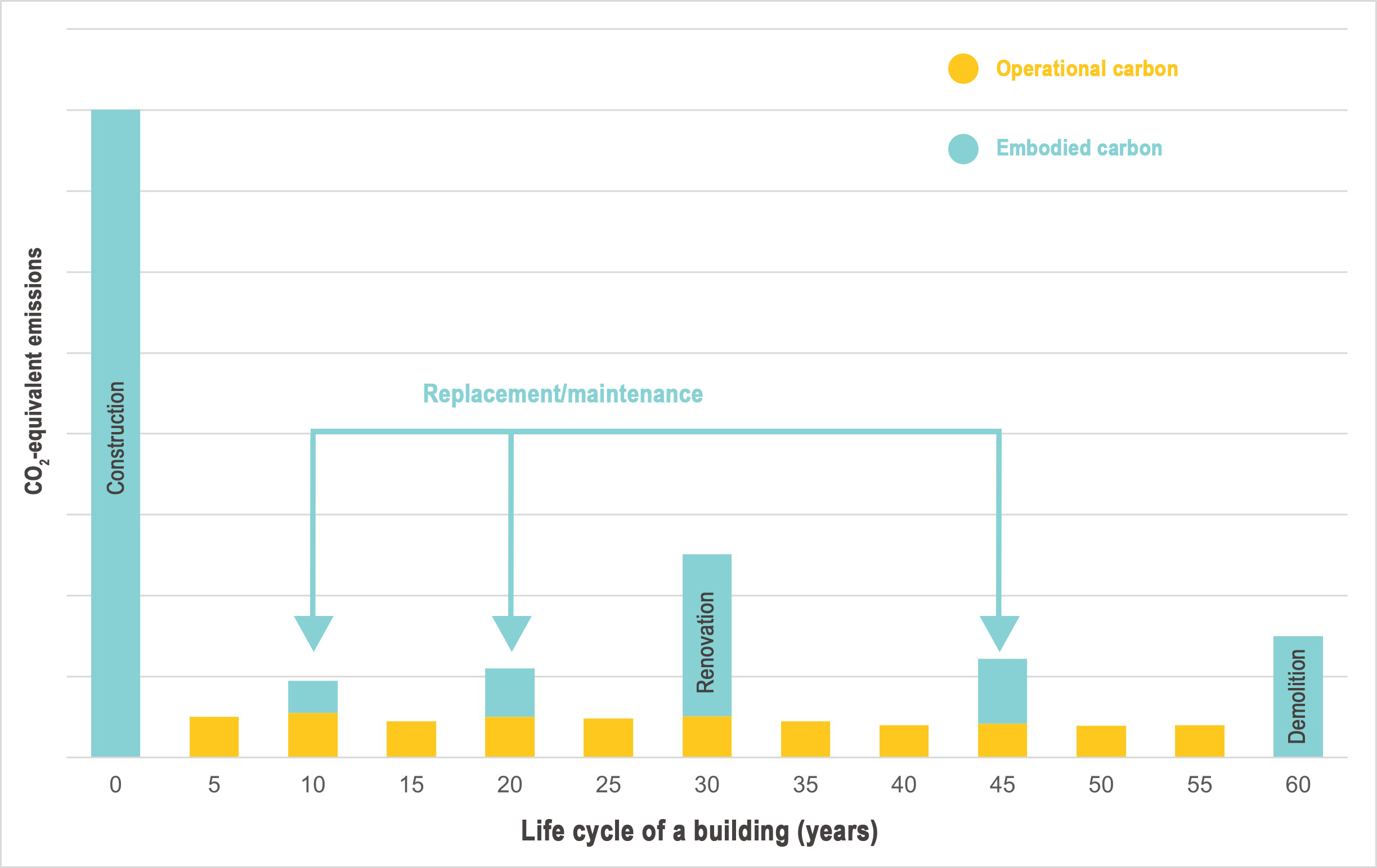
The carbon footprint of a building over its life cycle. Source © ABUD
Operational Emissions from Installed Materials
In the operational phase, life cycle analysis considers more than just the commonly highlighted energy consumption. Installed materials contribute to minor yet continuous emissions, including direct emissions during use (B1), as well as emissions from maintenance (B2), repair (B3), and eventual replacement (B4). These emissions occur regularly or cyclically throughout a building’s lifetime—for instance, through refrigerant leaks or routine maintenance activities. This is due to the fact that the expected service life of most building systems and materials is considerably shorter than the full structural life cycle of the building.. The EU Level(s) framework, for example, assigns typical reference service lives to different building elements: for a plastered façade insulation system this is typically 30 years, for mechanical systems about 15–20 years, and for floor coverings as little as 10–15 years.
During building operation, an important task is to maximize the lifespan of installed materials through proper maintenance and well-planned scheduling. Implementing system-level repair and replacement strategies can reduce the frequency of repairs and replacements, thereby delaying the need for major renovations. Emissions from material replacement can be further minimized by designing with durable and resilient materials and by using components that are easily replaceable, recyclable, and modular.
Renovation
Despite regular maintenance, renovation eventually becomes inevitable as finishes, mechanical systems, and other built-in elements wear out or can no longer meet modern energy and functional requirements. A significant portion if Hunagry’s building stock is outdated from an energy prefeormance perspective, making renovation interventions particularly important. The environmental impacts of renovation are evaluated in LCA phase B5.
The timing and extent of retrofitting are crucial factors influencing a building’s overall life-cycle emissions. While disposing of materials and installing new building components and mechanical systems increases the embodied carbon, it also leads to significant reductions in energy and water consumption, thereby lowering operational emissions and costs in the long term. Consequently, even renovations driven by aesthetic or functional needs should incorporate energy efficiency considerations. A successful renovation strategy balances environmental benefits with economic returns: the reduction in operational energy demand and carbon emissions from retrofitting not only compensates for the initial carbon footprint but also delivers long-term financial savings.
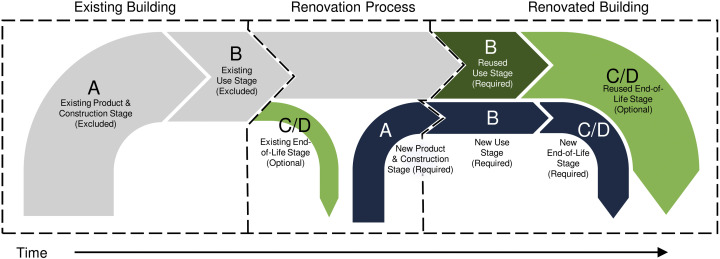
The LCA phases of renovation. Source © Hasik et al. 2019
Tools like the Carbon Risk Real Estate Monitor (CRREM) help optimize renovation by modeling a building’s carbon footprint and identifying the timing of renovations needed to align with the Paris Climate Agreement targets. CRREM can assess individual buildings or entire portfolios, predicting when energy-intensive renovations are necessary based on current operating patterns to ensure compliance with emission caps. Additionally, the tool evaluates the approximate economic and environmental payback of renovation measures, supporting more effective renovation planning.
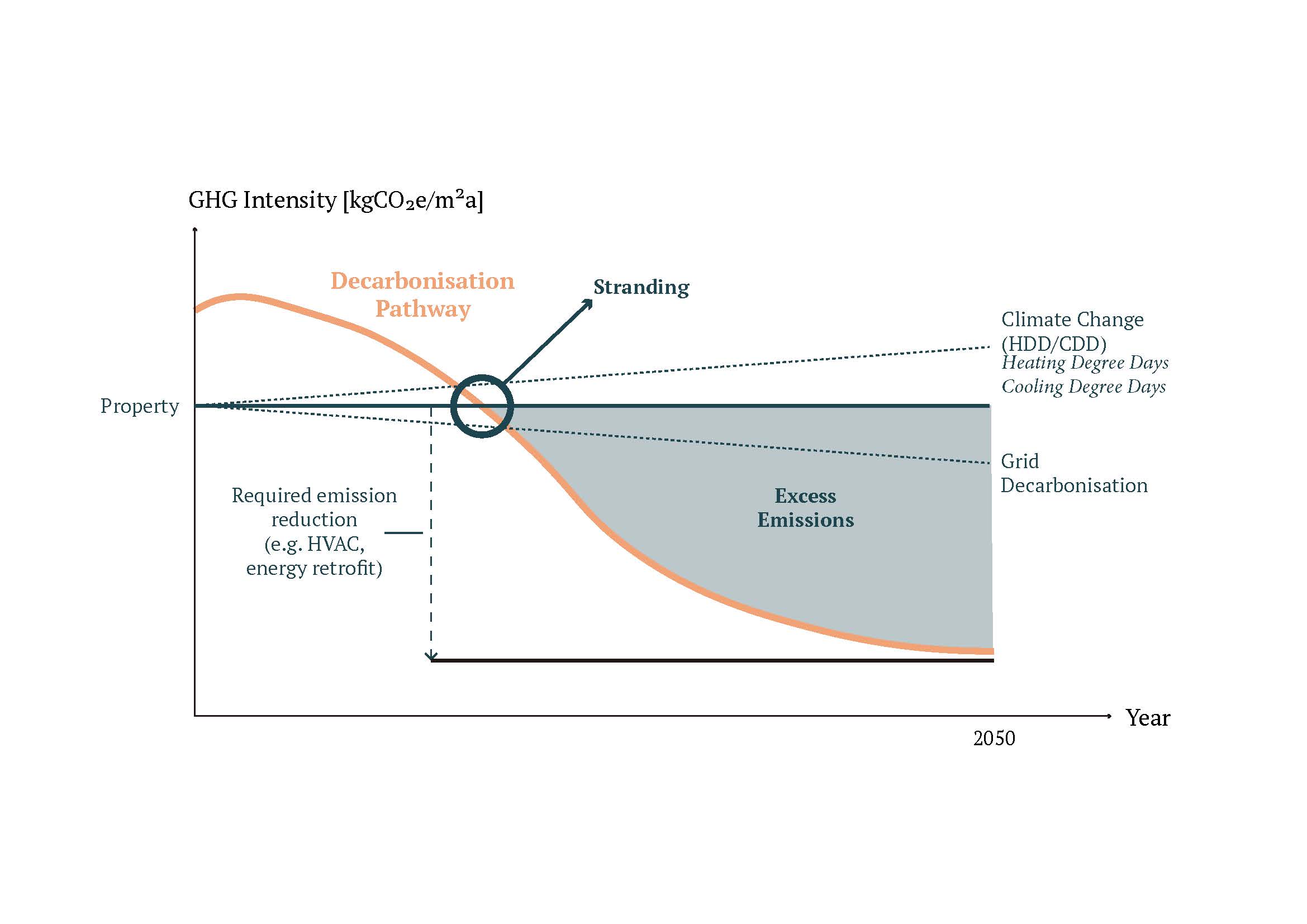
The logic of the CRREM tool methodology that illustrates when in the life cycle of a building renovation is needed. Source © CRREM
One of the most common and effective renovation interventions is energy retrofitting, which can significantly improve energy efficiency and reduce maintenance costs. When planning such investments, it is advisable to follow a phased approach that begins with reducing energy demand—particularly for heating and cooling—through passive measures such as improving insulation of facades and roofs, replacing windows and doors, and enhancing shading solutions. Next, mechanical systems can be upgraded by installing more efficient heating, ventilation, lighting, and smart control technologies. Finally, to cover the remaining energy needs, integrating renewable energy sources like solar photovoltaics or heat pumps is recommended. This sequence ensures that investments are both technically sound and environmentally sustainable.
Innovative Deep Energy Renovation in Budapest’s 18th District
A notable example of reducing operational emissions and costs is the deep energy renovation of a kindergarten in Budapest’s 18th district, carried out as part of the StepUP R&D project led by ABUD Engineering within an international consortium of ten partners. The renovation included installing prefabricated modular sandwich panels on the building’s façade and upgrading the roof insulation, resulting in a 32% reduction in heating energy consumption. Beyond passive measures, the project replaced the outdated mechanical system with an optimized setup featuring heat pumps, intelligent heat accumulators (HeatTank by HeatVentors), and solar panels, further enhancing overall energy efficiency.
Based on the LCA analysis of the refurbishment, operational emissions were reduced by 75.73% following the retrofit. While energy consumption remains the largest contributor to life cycle emissions, 39% of it is now supplied by renewable sources through the solar PV system. The analysis also shows that the embodied carbon from newly installed materials will be offset within seven years due to the significant reduction in operational emissions—well before the systems would typically require replacement.
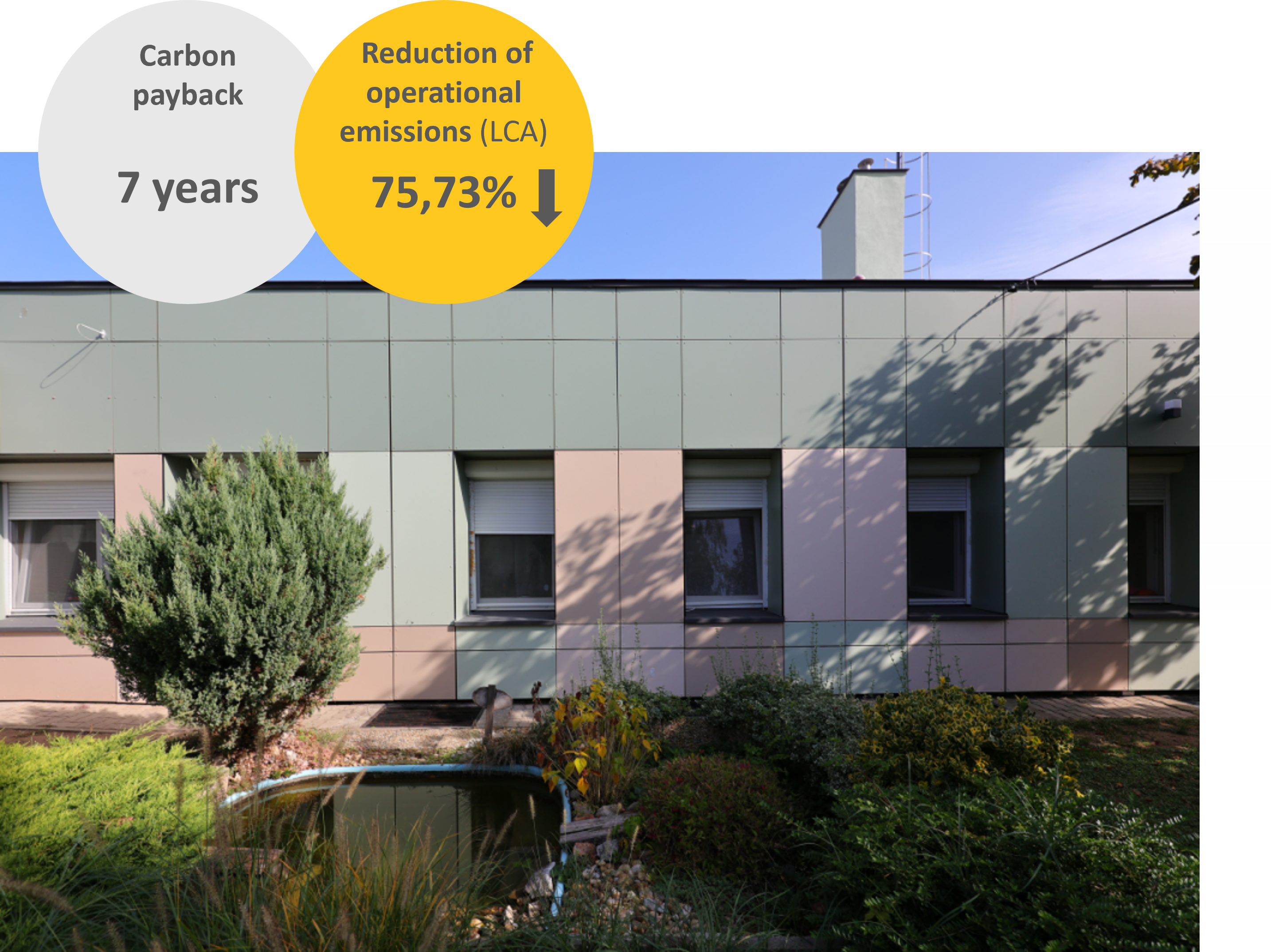
Reduction of operational carbon emissions and embodied carbon payback of the renovated kindergarten building as part of the StepUP R&D project. Source © Budapest XVIII. District Pestszentlőrinc – Pestszentimre Municipality, ABUD
Operational CO₂ Emissions: Energy and Water Consumption
Energy and water use during a building’s daily operation are assessed in LCA phases B6 and B7. These phases often represent the largest portion of a building’s total life cycle carbon footprint, particularly for long-lived structures. Operational water consumption, along with the electricity required for heating, cooling, lighting, and powering appliances—equivalent to Scope 2 emissions—results in significant and continous emissions, especially when the energy sourced from non-renewable resources.
Reducing operational energy consumption hinges on lowering primary energy demand and shifting away from fossil fuels, as discussed earlier. Building operators can further optimize consumption through the use of a Building Management System (BMS). In terms of water use, installing water-saving devices, greywater recycling, and rainwater harvesting systems can yield significant savings and emission reductions. Integrating these with BMS-enabled monitoring and leakage detection enhances water conservation, reducing both potable water use and the associated energy consumption and emissions.
The tightening regulatory environment in Europe—especially with zero-emission building requirements coming into effect by 2030—demands a drastic reduction in operational carbon footprints. To meet these goals, building operations must adopt long-term, planned, data-driven, and proactive energy management strategies. Concurrently, ongoing decarbonization of the energy grid will further lower CO₂ emissions. As a result, operational emissions are expected to decline both in absolute and relative terms, increasing the proportional significance of embodied carbon in the building’s overall life-cycle footprint.
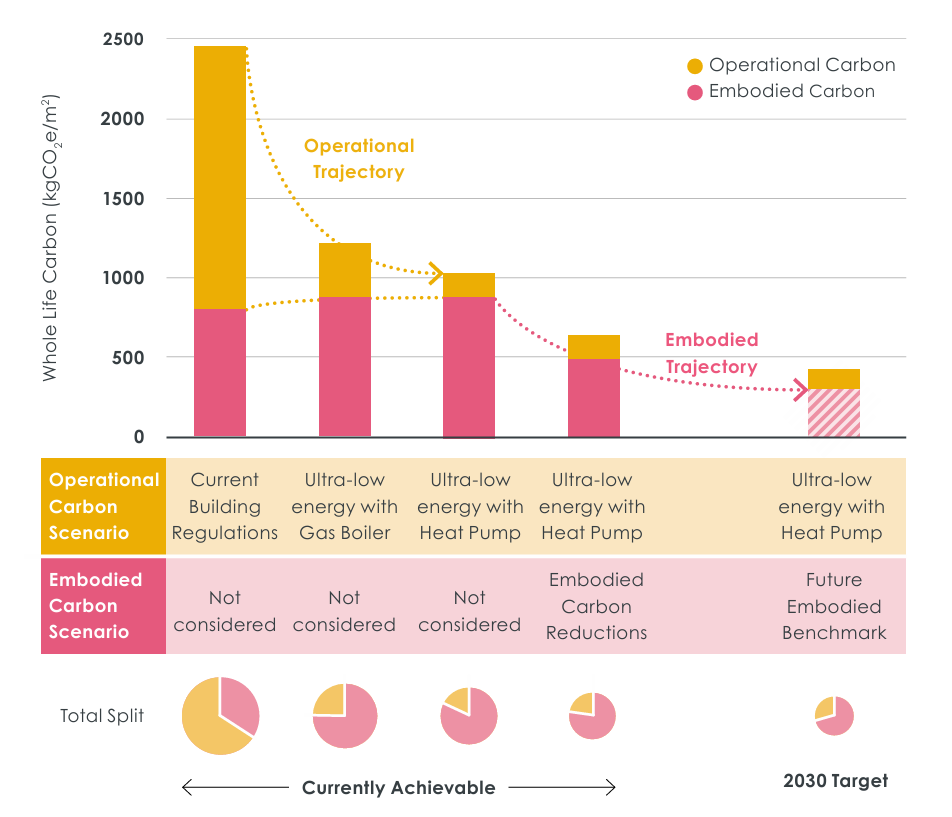
Expected reduction in operational and installed carbon. Source © LETI 2020
In the case of innovative buildings that combine passive and active systems, utilize renewable energy sources, and apply comprehensive energy optimization, even a positive annual energy balance can be achieved. Energy efficiency can be further enhanced by creating Positive Energy Districts (PEDs), where energy flows and sharing between buildings minimize losses and reduce operating costs. The design and operational aspects of PEDs have been covered in detail in our previous series of articles.
End-of-Life Options: Demolition and Waste Management
The end of a building’s life does not mark the end of its environmental impacts. In fact, the demolition and disposal stages (LCA phases C1–C4) can generate significant emissions, especially without careful planning and proper waste management. These phases include the physical demolition process (C1), material transport (C2), waste processing (C3), and final disposal (C4). Environmental burdens during demolition such as dust, noise, particulate matter, and fuel consumption from machinery contribute to the overall impact. However, adopting a planned and selective demolition approach can substantially reduce these environmental effects.
In line with the principles of circular design, it is important to consider the recyclability and reusability of materials, as well as the use of dry-technology and modularly assembled structures, starting from the design stage. These strategies help ensure that materials generated during demolition do not become waste but can instead be reused or recycled. An effective demolition strategy can provide both environmental and economic benefits by lowering disposal costs and reintegrating valuable materials back into the economic cycle.
Demolition practices are increasinglysubject to stricter regulatory requirements as well. For instance, the EU Waste Framework Directive mandates the maximization of reuse and recycling of construction and demolition waste. Sustainability certification schemes like BREEAM also require a pre-demolition audit to identify and document reusable and recyclable materials in advance. This process not only enhances demolition efficiency but also unlocks opportunities for higher-value material recovery.
Beyond Life-Cycle Benefits and Pressures
Section D is a unique and increasingly important elemt of the LCA , as it captures the environmental benefits that occur outside of the building’s life cycle but as a consequence of it. This includes, for example the reuse and recycling of materials in other systems and the emissions savings gained by using recovered materials as secondary raw materials. If, for instance, recovered steel from a demolished building replaces the need for primary steel production, the avoided emissions are accounted for in stage D. This perspective requires strategic planning at the design stage, as material recovery is only feasible ifcomponents are easily separable, infromation is available and quality is ensures.
Phase D plays a crucial role in the context of transitioning to a circular economy where the goal is to prevent construction materials from becoming waste and instead nable their use as secondary resources in other construction or industrial processes. Therefore, when designing the buildings of the future, special attention must be given to design for deconstruction and to ensuring that materials and components can function as part of a material bank.. It is important to note that Phase D accounts not only for the environmental benefits of using secondary raw materials but also for the burdens associated with recycling and transportation. Therefore, the outcome of this phase should be interpreted as a net environmental balance.
Phase D is therefore not merely the conclusion of a building’s life, but also the beginning of a new material cycle—where recovered materials serve as raw inputs for future construction processes.
Conclusion
Life Cycle Assessment of buildings must extend beyond the design stage to include construction, operation, refurbishment, and demolition—all of which significantly affect a building’s environmental performance. Concious decisions throughout these phases can substantially reduce emissions. In the next and final article of this series the focus will shift to product-level life cycle analysis, examining the environmental performance of individual building materials and products, offering a more detailed foundation for building-level decision-making.
Authors
Lilla Friedreich
Junior Sustainability Consultant, ABUD – Advanced Building & Urban Design
Environmental Engineer (BME)
Melinda Orova
Senior Consultant, ABUD – Advanced Building & Urban Design
Master of Architecture (BME)
Master of Urban and Facility Energy (PTE)
LEED Accredited Professional BD+C
Sources
[i] ABUD (2024): A StepUP kutatás-fejlesztési projekt innovációi és eredményei
https://abud.hu/a-stepup-projekt-innovacioi-eredmenyei/ és https://abud.hu/portfolio/stepup/
[ii] Carbon Risk Real Estate Monitor Reference Guide (2024)
[iii] Hasik V, Escott E, Bates R, Carlisle S, Faircloth B, Bilec M (2019) Comparative whole-building life cycle assessment of renovation and new construction, Building and Environment, Volume 161, ISSN 0360-1323, https://doi.org/10.1016/j.buildenv.2019.106218
[iv] Joint Research Centre (JRC) (2021) Level(s) Indicator 2.1: Bill of Quantities, Materials and Lifespans (Version 1.1). Publications Office of the European Union.
https://susproc.jrc.ec.europa.eu/product-bureau/sites/default/files/2021-01/UM3_Indicator_2.1_v1.1_34pp.pdf
[v] London Energy Transformation Initiative (2020) LETI Embodied Carbon Primer: Supplementary guidance to the Climate Emergency Design Guide
https://www.leti.uk/_files/ugd/252d09_8ceffcbcafdb43cf8a19ab9af5073b92.pdf