
StepUP Project – The Budapest Demo site

Public non-residential building (kindergarten) in Budapest, Hungary

StepUP projects innovative solutions and methodologies were tested in 3 pilot sites, one of them was Zöld Liget Kindergarten in Budapest, Hungary. The kindergarten, owned by the 18th Municipality of Budapest and built in 1952, underwent deep energy renovation. The energy performance of the building was poor due to significant heat loss through the roof and the walls. Furthermore, the whole heating system, the hot water system and the related equipment were outdated.
 

Demo site completion

100%


What We Did
  • Holistic renovation methodology development
  • Stakeholder engagement strategy
  • Building material life-cycle assessment (LCA) implementation
  • Pilot coordination
Year

2019 – 24

Building Area

500 sqm

Client

European Union

Façade renovation

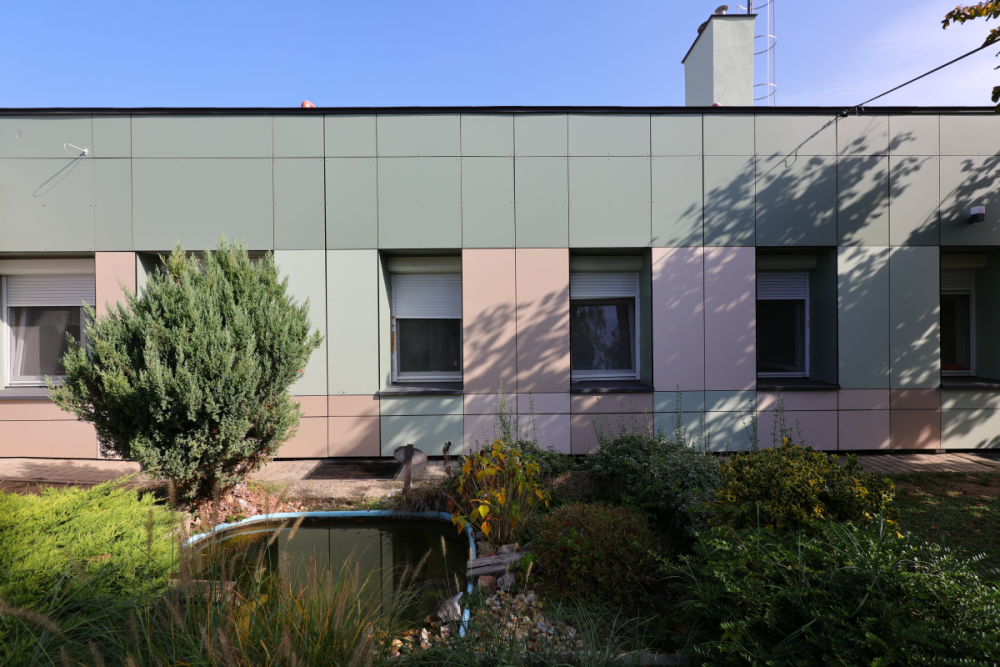
Through a holistic renovation strategy, incorporating enhancements to the building envelope and upgrades to active systems in line with StepUP methodology, measures were taken to address heat loss and enhance thermal comfort.

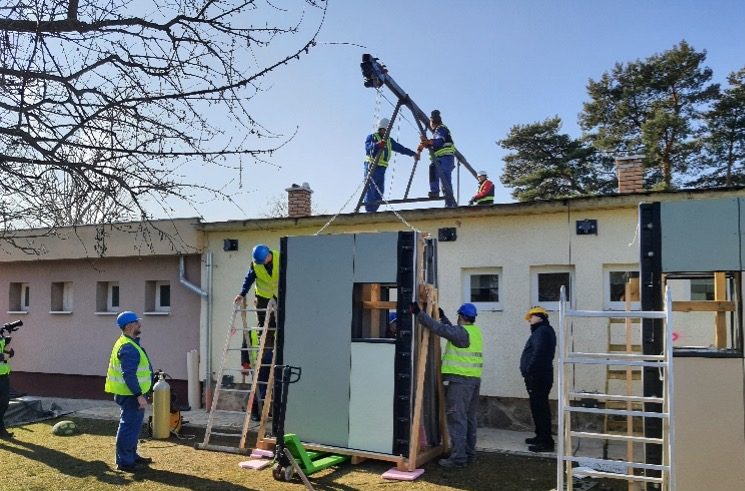
The StepUP façade P&P solution was deployed and validated in the Zöld Liget Kindergarten in Budapest, Hungary. The envelope solution is estimated to passively contribute to the reduction of the building’s energy consumption and, of course, to the visual experience.

According to calculations, the building’s heating energy demand is reduced by 32% only by the thermal insulation.

Renewal of the heating system

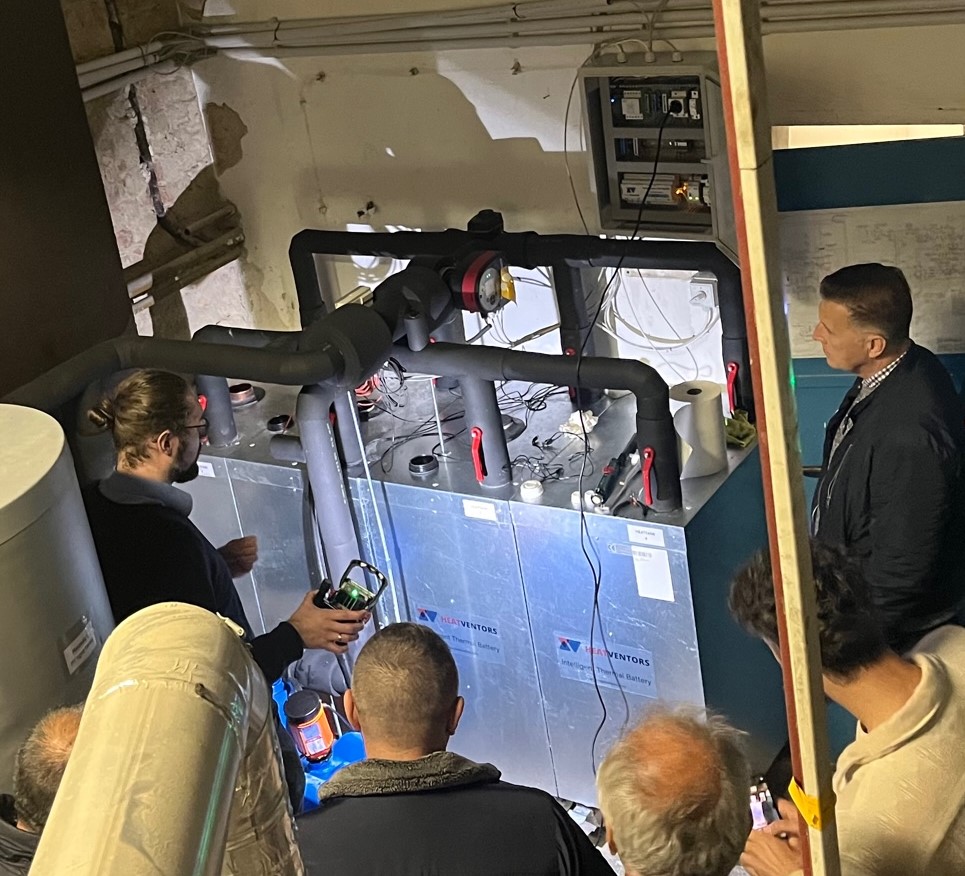
This pilot retrofitting also included the renovation of the heating and cooling system with a thermal battery storing and flexibly consuming heating energy.

During the renovation, the old gas boiler system was replaced with an energy-efficient heat pump system. Additionally, a solar panel system was installed on the roof, capable of covering the average energy consumption. 

If the solar panels generate surplus energy and the heat pumps also produce excess energy, it is stored in StepUP thermal battery technology.

For the optimal energy consumption and maximum comfort, the heating and cooling of the entire building are ensured in combination with radiators and fan coils.


Key pilot outcomes

The Budapest Pilot led to significant improvements in thermal comfort and energy efficiency.
The pilot served as a use case on the application of a step-by-step guide for deep renovation projects putting the focus on the occupants and minimising the disruptions on site.

Minimised disruption

A conventional energy renovation of the building would have required a substantial upfront expense which was not accessible to the municipality budget. Furthermore, the works would have significantly disrupted the use of the kindergarten for the children who attend the school and their families, plus the teachers and support personnel who work there.

Potential for replicability

The 18th District Council of Budapest owns other 95 buildings in various need of deep renovation to reach NZEB standards according to the EPBD requirements. There is therefore a clear potential for replicability of the methodology and process within the 18th District.

Methodology validation

This pilot allowed the validation of the StepUP deep renovation methodology involving all stakeholders to outline key priorities in the selection of Energy Conservation Measures, focussing on comfort and IEQ.

Watch our video summarising the project’s main achievements and results:

Learn more about the project: www.stepup-project.eu